
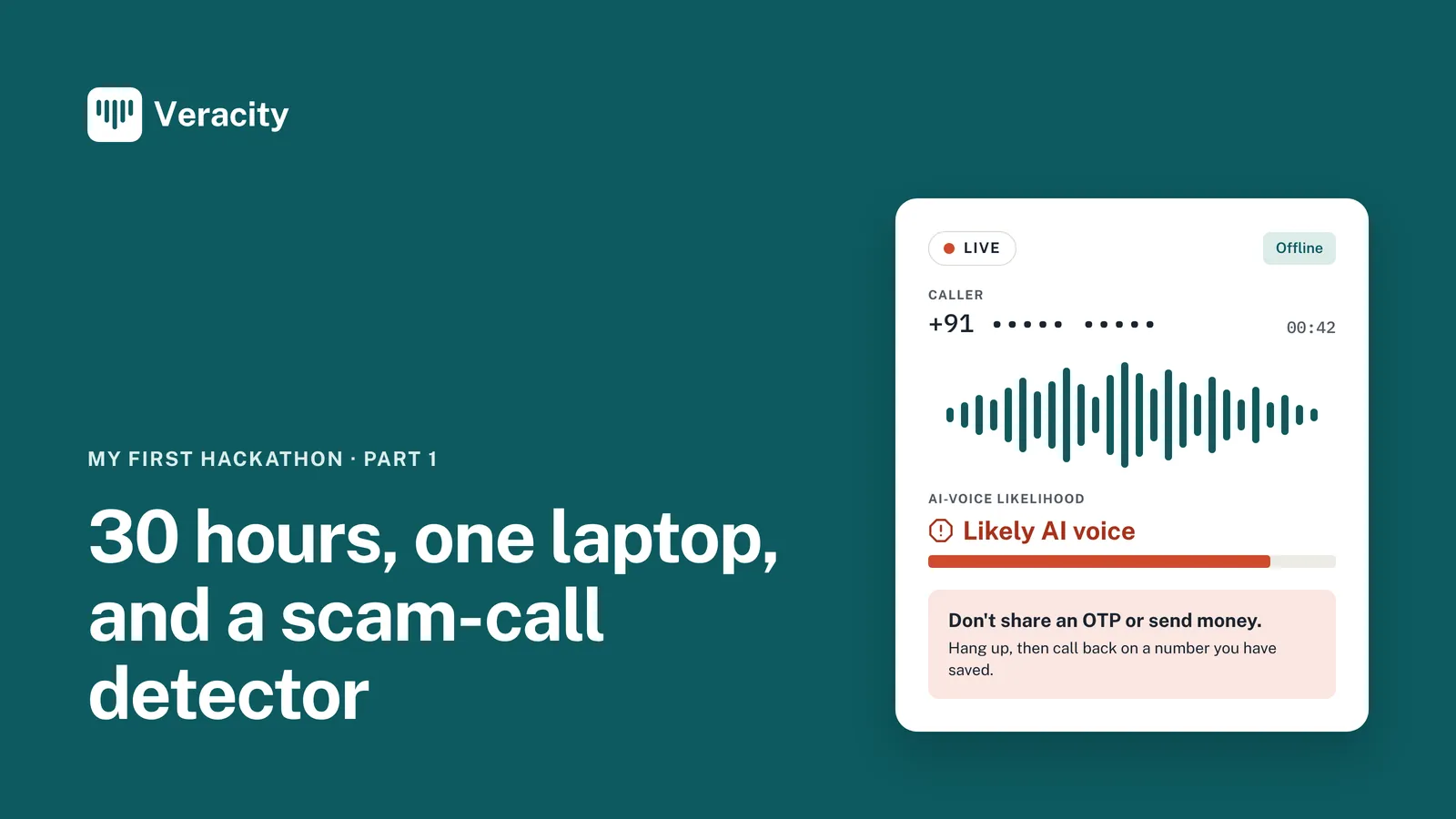
Imagine your phone rings and it's your brother's voice. He sounds panicked, he's in trouble, and he needs money right now. Except it isn't him. It's an AI clone of his voice, made from a few seconds of audio he once posted online.
Calls like this are hitting more and more families in India, and in the middle of a call, almost nobody can tell a real voice from a fake one. That was the problem I took to my first-ever hackathon, CT BuildFest 2.0 at my college in Jalandhar.
The project was Veracity, a tool that listens to a live call and tells you whether the voice on the other end is real. I spent the 30 hours of the event coding, breaking and fixing it. This is the story of those 30 hours, and what they taught me about building real products.
What Veracity does
Veracity sits between you and a suspicious call and runs three checks at the same time:
- Who is calling? It looks at the caller's number and checks it against public data for warning signs.
- Is the voice real? It listens to the call live and shows a percentage: how likely it is that the voice is AI-generated.
- What are they saying? It watches the conversation for classic scam patterns, like panic, secrecy and sudden requests for money, in English, Hindi and Hinglish.
The three checks combine into a single risk score. If the call looks like a scam, Veracity warns you while you're still on the line, not after the money is gone.
For the technically curious: a wav2vec2 deepfake model scores the voice every second, Whisper transcribes the call, and a set of scam rules plus Llama 3.1, running locally through Ollama, read the transcript. A FastAPI backend streams all of it to a React dashboard.
Two decisions mattered most to me. First, everything runs locally on your own machine, so your calls never get uploaded anywhere. Second, Veracity creates an evidence report you can attach to a complaint on the national cybercrime helpline (1930) or cybercrime.gov.in. When someone gets scammed, they often don't know what to put in that complaint. Veracity hands them a ready record.
Six people, one laptop, 30 hours
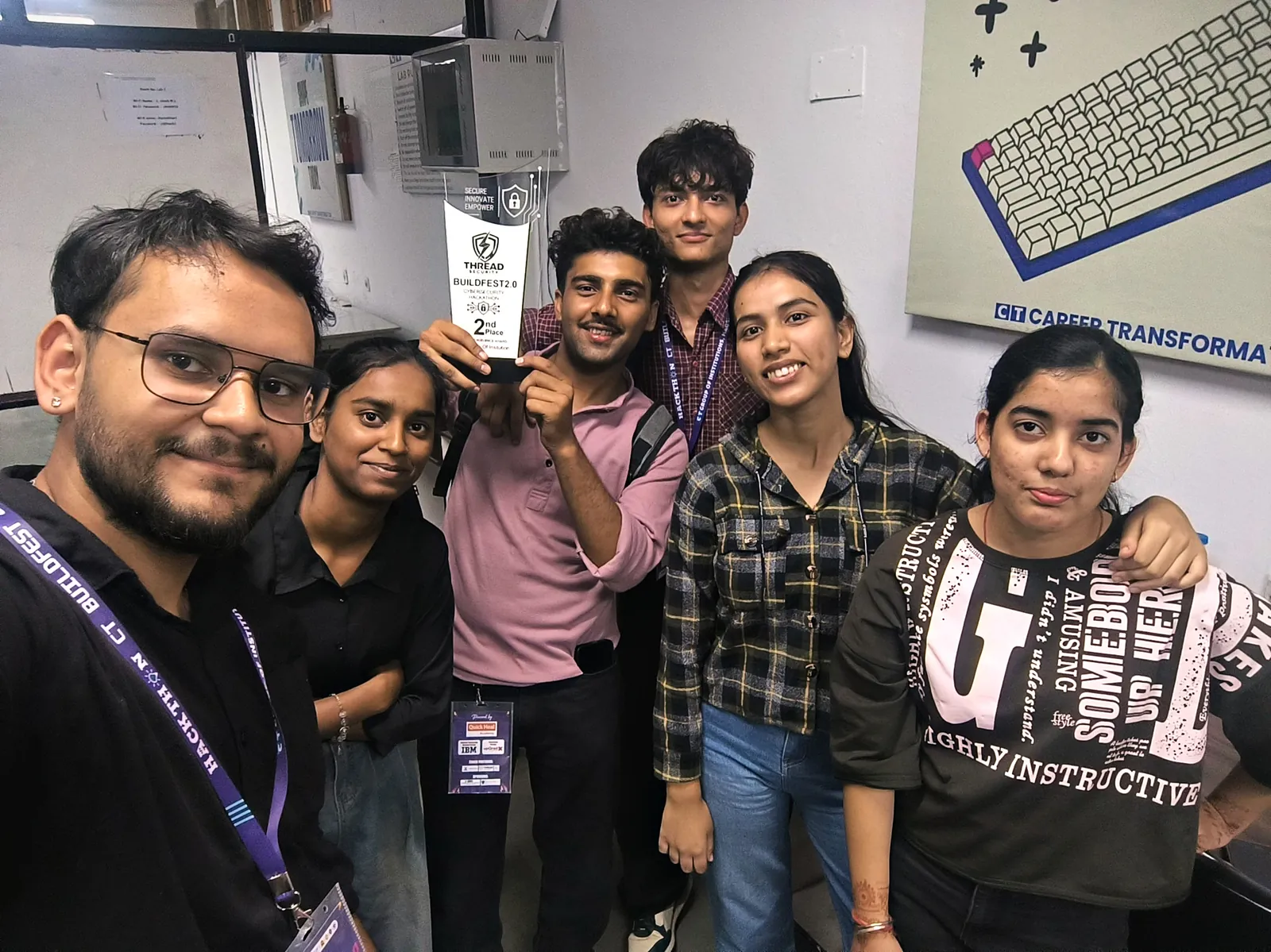
Our team, Coffee to Code, had six members. Srishti led the team, with Muskan and Ananya from 5th semester, and Shantnu, Shubham and me from 1st semester.
I wrote Veracity's code, so for 30 hours that laptop barely left my hands.
Written like that, it sounds like a solo story. It wasn't. Somewhere in the middle of the night, the stress caught up with me. Every time it did, my teammates calmed me down and kept talking to me so I could keep going. I honestly don't know if I'd have made it to morning without them.
That's the first thing this hackathon taught me: you don't have to write the code to be the reason the code gets written.
Looking back, carrying the whole build alone was also a weakness. My team could have done much more if I'd handed work off early, and that's one of the mistakes I'll unpack in Part 3.
The evaluation
When the mentors reached our table, I walked them through Veracity myself, from the problem to the live demo. Then the counter-questions started. They went from deep technical details all the way to how an ordinary person would actually use it.
At one point they wanted to see more of my work, so we scrolled through my GitHub profile together.
The feedback I'll remember most came at the end: the mentors told me Veracity could seriously be expanded into a real business. At my first hackathon, hearing that meant a lot.
Second place, and what I'm taking home
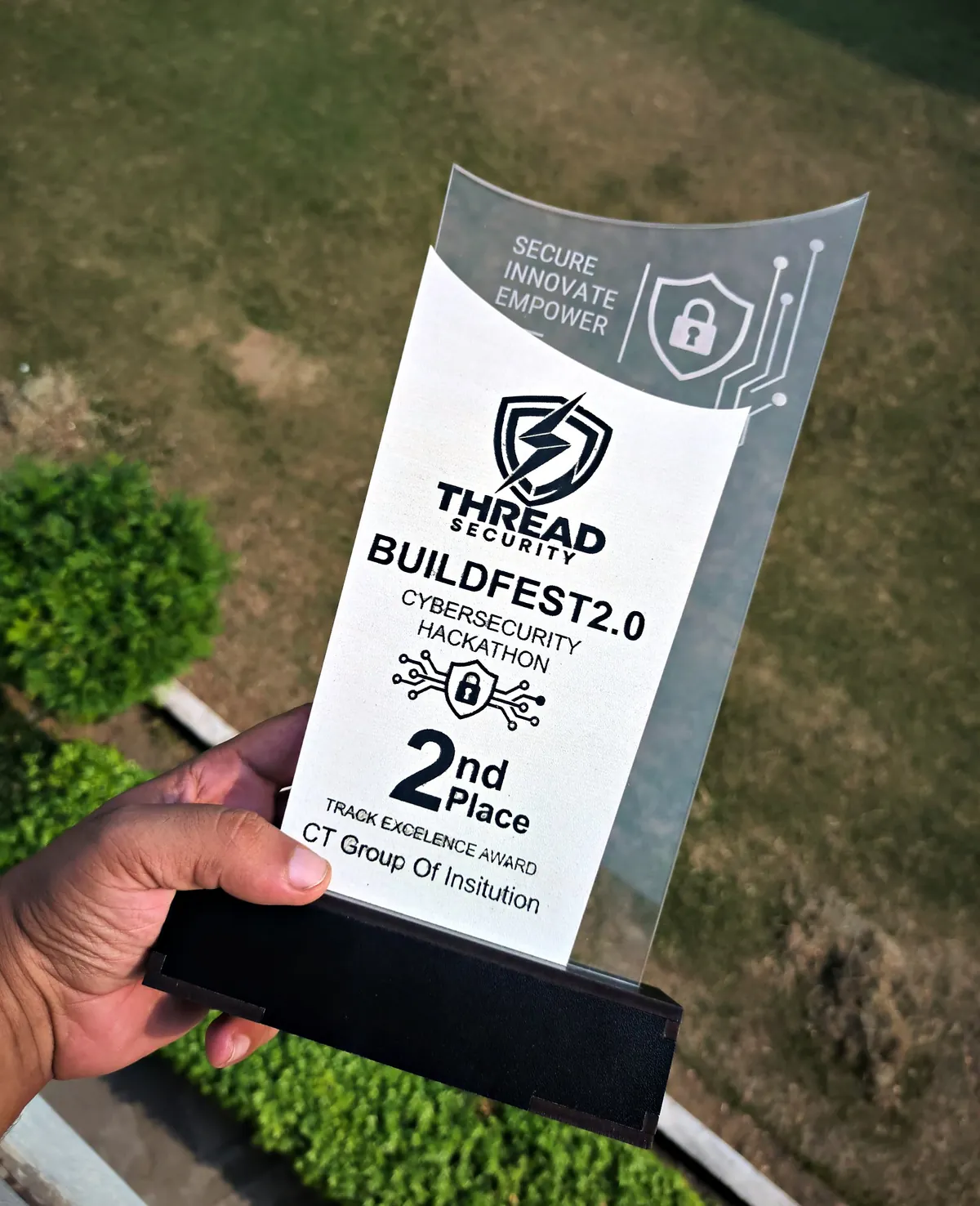
Veracity won second place. As a first-semester student at my first hackathon, I'm proud of that. I won't pretend I'm fully satisfied, though. I came for first, and that hunger is coming with me to the next one.
Srishti, our team lead, went up on stage to accept the trophy. When she came back down, she handed it to me and said I deserved it. That one gesture says a lot about the kind of leader she is.
But the trophy isn't the main thing I'm taking home. Two lessons are.
I learned what working on an actual product feels like. Tutorials and side projects give you clean problems. A product gives you a real user, a hard deadline, a demo that has to work in front of people, and questions you can't predict. Every decision suddenly had a cost: what to build, what to cut, what might break on stage.
I got a real sense of how AI is used in actual development. It's easy to put "AI-powered" on a slide. It's a completely different thing to make AI work inside a live, messy situation like a real phone call, where it has to be fast, right, and useful to someone who isn't technical. Building Veracity under pressure showed me where AI genuinely helps, where it falls short, and why you still have to understand everything you ship.
Read Part 2
Part 2 is up: Three Signals, One Verdict, and a Payment That Waits. It covers why Veracity exists, how it works, and what I built on top of it for the PayPal AI Hackathon. The lessons and mistakes I promised here have moved to Part 3.
If you want to see the project, Veracity is on my GitHub.
And if you're a first-year wondering whether you're ready for a hackathon: you are. Go to one.